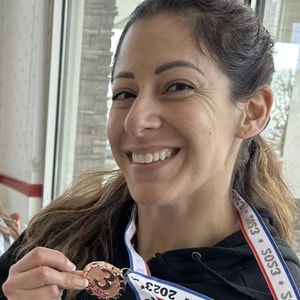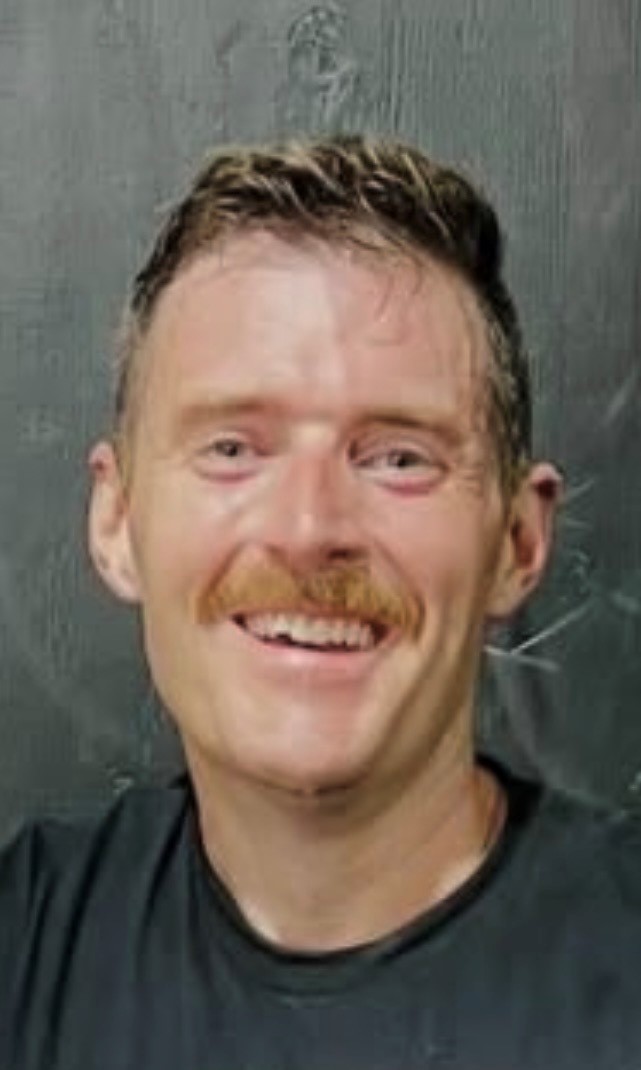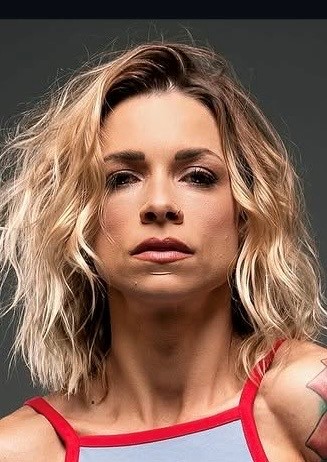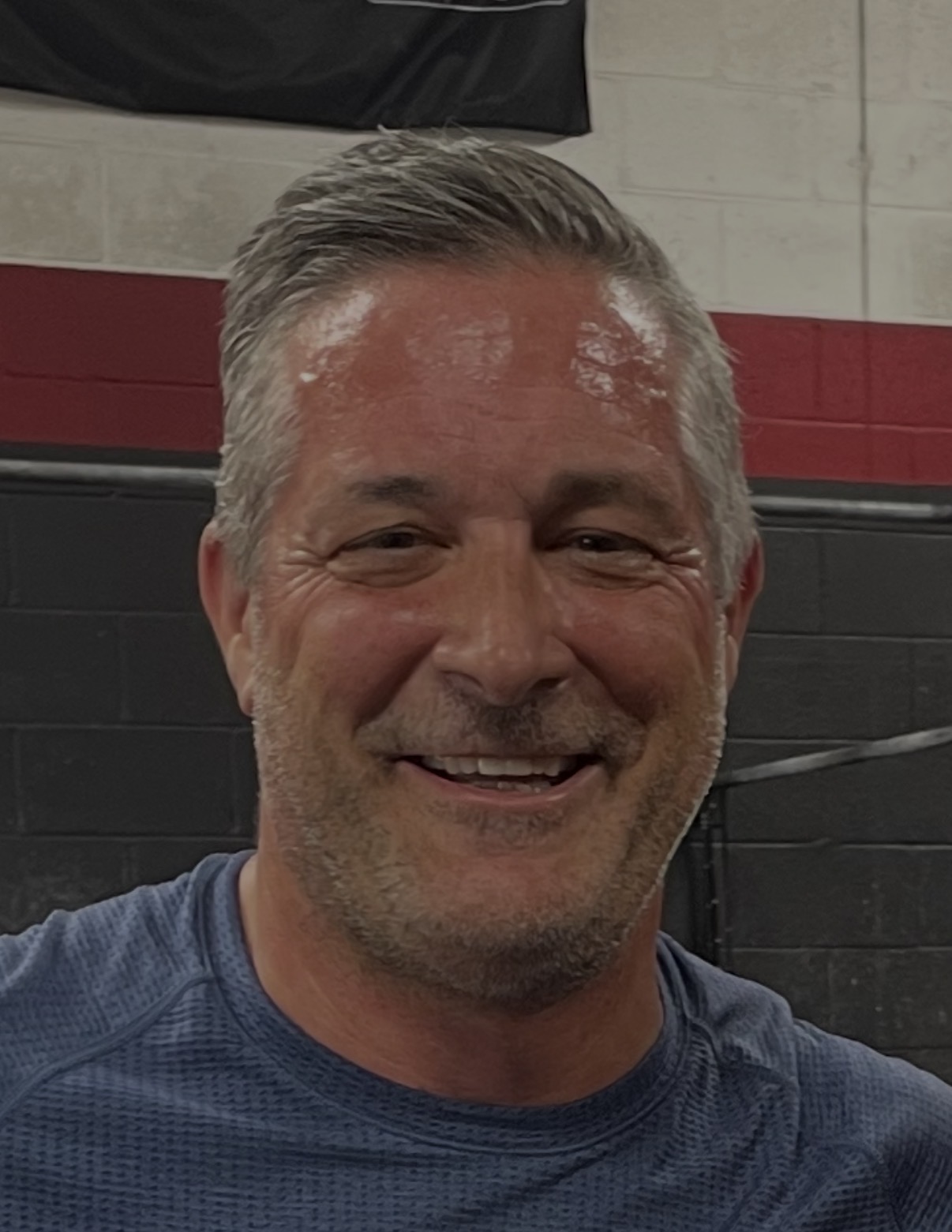
"The peaking protocol was dialed. I felt stronger on meet day than I ever had in the gym, and that doesn't happen by accident."
Claudia ArzilloUSAPL Powerlifter
★★★★★
"7 medals in 9 events at the Senior Games. Everyone told me to slow down — Brad told me to train smarter. That made all the difference."
Tonnie DahlSD Sr. Games Gold Medalist
★★★★★
"Qualifying for Quarterfinals once is hard. Doing it three years straight means the coaching is building something sustainable, not just chasing short-term results."
Maria AlvarezCrossFit Athlete
★★★★★
"Six months after back surgery, I squatted 300 pounds. Brad understood post-surgical progression and made me believe it was safe to push."
Robert BrowerPost-Surgical Comeback
★★★★★
"60 pounds in 8 months, and I actually kept my energy through the whole process. This wasn't a crash diet — it was a structured plan I could stick to."
Charlie HouckFat Loss / Nutrition
★★★★★
"I won my pro card, and I did it without destroying myself in the process. The prep was hard, but it was structured — I never felt like I was guessing or spiraling."
Abby FleisnerIFBB Pro Bodybuilder
★★★★★
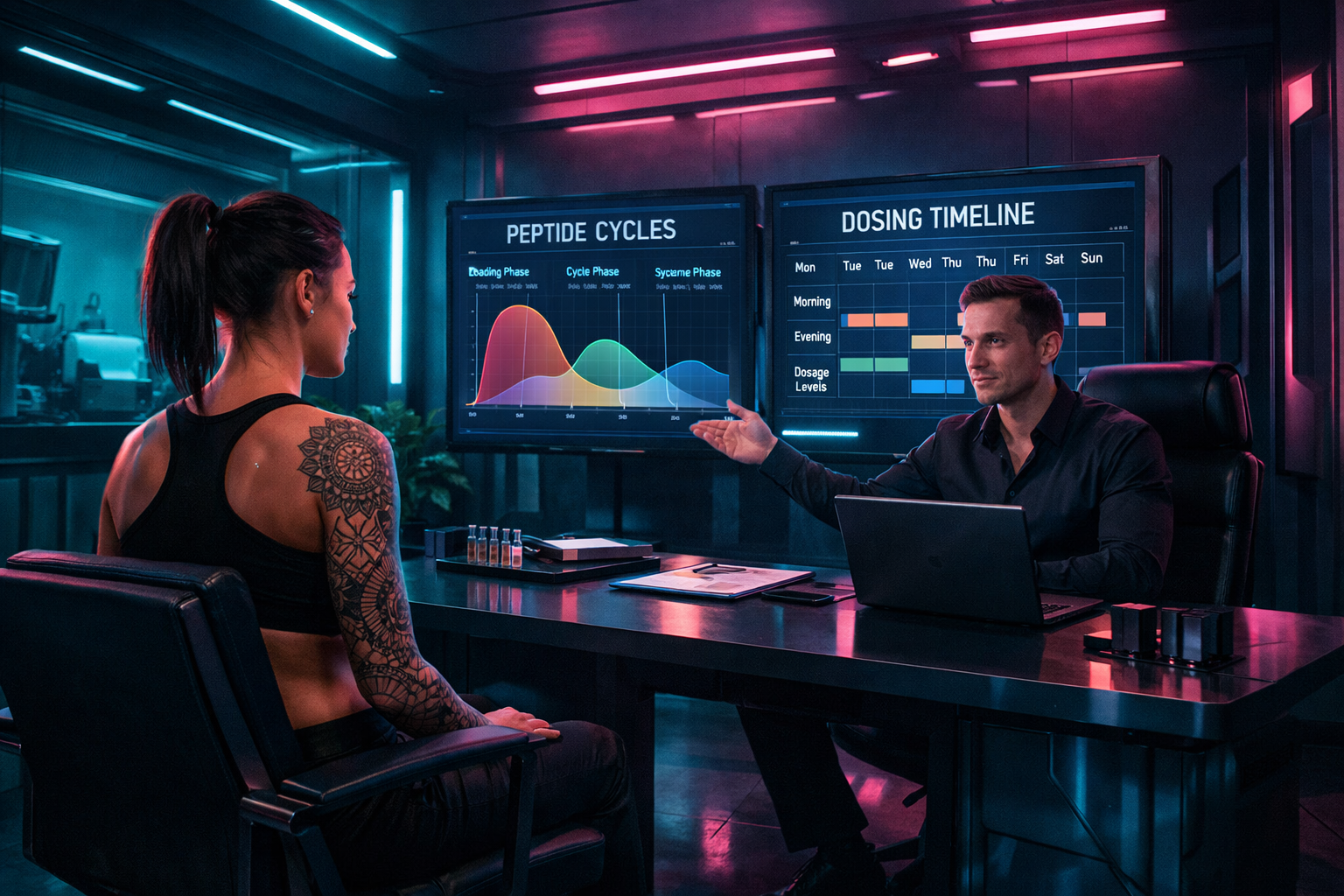
"I'd heard about peptides but didn't want to go in blind. Having a coach who monitored everything and adjusted along the way gave me confidence that I was doing this the right way."
Mariah YeagerPeptide-Assisted Body Composition
★★★★★
"Brad built my programming specifically around my competition schedule. Going into my last CrossFit comp, I felt more prepared than I ever have — every weakness had been addressed."
KerryCrossFit Athlete
★★★★★
"I went from surviving HYROX to competing in pro division. The difference was learning how to pace the full race instead of just going hard and hoping."
Mathieu CelestinHyrox Pro
★★★★★
"The peaking protocol was dialed. I felt stronger on meet day than I ever had in the gym, and that doesn't happen by accident."
Claudia ArzilloUSAPL Powerlifter
★★★★★
"7 medals in 9 events at the Senior Games. Everyone told me to slow down — Brad told me to train smarter. That made all the difference."
Tonnie DahlSD Sr. Games Gold Medalist
★★★★★
"Qualifying for Quarterfinals once is hard. Doing it three years straight means the coaching is building something sustainable, not just chasing short-term results."
Maria AlvarezCrossFit Athlete
★★★★★
"Six months after back surgery, I squatted 300 pounds. Brad understood post-surgical progression and made me believe it was safe to push."
Robert BrowerPost-Surgical Comeback
★★★★★
"60 pounds in 8 months, and I actually kept my energy through the whole process. This wasn't a crash diet — it was a structured plan I could stick to."
Charlie HouckFat Loss / Nutrition
★★★★★
"I won my pro card, and I did it without destroying myself in the process. The prep was hard, but it was structured — I never felt like I was guessing or spiraling."
Abby FleisnerIFBB Pro Bodybuilder
★★★★★
"I'd heard about peptides but didn't want to go in blind. Having a coach who monitored everything and adjusted along the way gave me confidence that I was doing this the right way."
Mariah YeagerPeptide-Assisted Body Composition
★★★★★
"Brad built my programming specifically around my competition schedule. Going into my last CrossFit comp, I felt more prepared than I ever have — every weakness had been addressed."
KerryCrossFit Athlete
★★★★★
"I went from surviving HYROX to competing in pro division. The difference was learning how to pace the full race instead of just going hard and hoping."
Mathieu CelestinHyrox Pro
// The Problem
The three reasons athletes stop progressing.
Research consistently shows these are the biggest obstacles keeping serious athletes stuck — regardless of how hard they're training.
01
Training Blind
Fixed percentages assume your max is the same every day. It isn't. Sleep, stress, and fatigue shift your real capacity by 10–20% daily — but your program doesn't know that. You're either undertrained or digging a hole you can't climb out of.
02
Overtraining Without Knowing It
Over 60% of serious athletes hit overtraining syndrome at some point. The problem isn't effort — it's that there's no objective signal telling you when to push and when to recover. By the time you feel it, you're already behind.
03
Coaching Without Visibility
Most remote coaching is a PDF and a weekly check-in. Your coach never sees how you actually performed. They're reacting to how you felt, not what the data shows. That's not coaching — it's guesswork with a subscription fee.
// The Solution
One answer to all three problems.
Velocity-based training gives us an objective, real-time measurement of your capacity — every session. Here's how it solves each problem directly.
PROBLEM → SOLUTION
01
Real-Time Load Calibration
Solves: Training Blind. Bar velocity tells us your actual capacity today — not based on last month's test. If the bar is moving fast, we push. If it's slow, we adjust. Every session is calibrated to who you are right now.
02
Velocity-Based Fatigue Management
Solves: Overtraining Without Knowing It. We set velocity loss thresholds for every session. When bar speed drops past the threshold, we stop — before form breaks down and before the hole gets deeper. Your recovery becomes part of the program, not an afterthought.
03
Data-Driven Remote Coaching
Solves: Coaching Without Visibility. Your velocity data feeds directly into your programming. Brad sees your bar speed, your fatigue curve, and your adaptation trends — session by session. Same standard whether you're in San Diego or across the world.
// Meet Brad
Brad Yeager San Diego Strength Coach
I started Yeager's Gym because I wanted to coach the way training science says we should — with measurement, not guesswork. Most coaches hand you a percentage and hope for the best. I wanted to actually know how you were performing, in real time, every session.
Since 2020 I've coached athletes from their first barbell session to competitive powerlifting meets — in-person in San Diego and remotely around the world. Athletes have ranged from 20-year-old competitors to 70-year-old adults training for the next 40 years of their life.
The common thread? Every one of them gets the same standard of coaching. Measured. Programmed. Coached. The goal and the timeline change. The method doesn't.
I'm also a father of two, which means I understand what it's like to have zero free time and need every training hour to count. That's exactly why I built this system.
Certified Velocity-Based Specialist
CF-L2 CrossFit Trainer
USAW Weightlifting Coach
USAPL Powerlifting Coach
PN-1 Certified Nutrition Coach
SSRP Certified Peptide Therapist
// The Velocity Method
How it works.
01Measure
Every session starts with data. Bar velocity assesses your readiness and calibrates training loads in real time.
02Program
Built week by week using velocity data, block periodization, and individualized progression — never a template.
03Coach
Data is a tool. Coaching is the skill. We interpret the numbers, adjust the plan, and keep you progressing.
04Progress
Strength isn't a feeling — it's a trend line. Velocity data shows exactly how you're adapting over time.
This isn't for everyone. If you want a generic PDF program or a cheap monthly subscription with no real coaching behind it — this isn't the right fit. Yeager's Gym is for athletes who want a coach who's actually watching the data.
// Ways to Train
How we work together.
🏋️
In-Person Training
From $70
1-on-1 coaching in San Diego with full velocity tracking on every session.
In-person sessions start at $70. Most personal trainers in San Diego charge $100–$150 and don't measure anything — you're paying for someone to count reps. Here, every session is tracked with velocity data so Brad can prove your program is working, not just tell you it is.
I'm a beginner — is this too advanced for me?
It's the opposite. Most beginners get hurt or plateau because their coach has no objective way to know when the load is too heavy or the volume is too high. VBT gives Brad that signal from day one — so nothing is ever too much, too fast. The data protects you.
I don't live in San Diego. Can I still train with you?
Yes. Remote coaching uses the same velocity-tracked method. You lift at your gym, your bar speed data feeds into Brad's system, and your program adjusts weekly based on how you're actually performing — not how a template says you should. Learn about remote coaching →
How is this different from a regular personal trainer?
Most trainers write a program and hope it works. Brad measures every rep with a velocity sensor, sees exactly how your body responded, and adjusts the next session accordingly. It's the difference between guessing and knowing.
Still have questions? Email Brad — he answers everything personally.
🚫 0cookie-cutter programs
🙌 11,241high-fives delivered
🏋️ 5,000,000+lbs moved
🔔 8,912PR bells rung
🥇 96%USAPL meet attempts hit
📊 1,100,000+velocity data points collected
🚫 0cookie-cutter programs
🙌 11,241high-fives delivered
🏋️ 5,000,000+lbs moved
🔔 8,912PR bells rung
🥇 96%USAPL meet attempts hit
📊 1,100,000+velocity data points collected
Get Started
Ready to train with data?
Whether you're in San Diego or training remotely — it starts with a conversation.
I'm Brad Yeager — strength coach, gym owner, and the person behind the velocity data.
My Story
I started Yeager's Gym to coach the way training science says we should — with measurement, not guesswork.
Since 2020, I've coached everyone from first-time barbell athletes to competitive powerlifters — in-person in San Diego and remotely worldwide. Every one of them gets the same standard: measured, programmed, coached.
I'm a husband and father of two. I built this system because I know what it means when every training hour has to count.
Credentials
Certified Velocity-Based Specialist
CF-L2 CrossFit Trainer
USAW Weightlifting Coach
USAPL Powerlifting Coach
PN-1 Certified Nutrition Coach
SSRP Certified Peptide Therapist
Principles, not gimmicks.
01Measure everything that matters.
If we can't measure it, we can't improve it. Velocity data gives us an objective window into your training — every session.
02Program with intention.
Every set has a purpose. Every rep has a target. Programming decisions are made with data and adjusted based on your response — not copy-pasted from a template.
03Coach the person, not just the program.
A spreadsheet doesn't know you're stressed, under-slept, or nursing a sore knee. A coach does. Data informs the plan. Coaching adapts it to you.
04Strength serves the athlete.
Whether your goal is a 500 lb deadlift or carrying groceries at 75 — the method is the same. The application changes. The standard doesn't.
Get Started
Ready to Start?
Whether you're in San Diego or training remotely — the first step is a conversation about your goals.
In-person in San Diego or remote worldwide. Every option includes data-driven programming and direct coaching.
🏋️
In-Person Coaching
3090 Monarch St., San Diego, CA 92123
Train in person with full velocity tracking on every session. I coach you through every set — adjusting loads, managing fatigue, and building your program based on real-time data.
Comprehensive nutrition assessment, custom macro targets, meal timing strategy, and a full plan tailored to your body composition goals and training demands.
Your coach sees your data. Not just your check-in.
Remote programming powered by velocity data — so your training adjusts to how you're actually performing, no matter where you train.
The problem with most remote coaching
Most remote coaching works like this: you get a program. You train. You fill out a check-in form once a week. Your coach reads it, maybe adjusts a few things, sends next week's program.
The problem? The coach only sees what you report. And self-reported data is limited.
"How did the set feel?" is a useful question. But "How fast did the bar move?" is a better one.
How Remote Works
Data closes the distance.
If you own a VBT device — Vitruve, GymAware, Metric, or similar — your velocity data feeds directly into your programming. I see your bar speed, session by session. That data tells me:
Whether the prescribed load was right for you that day
How fatigue accumulated across the session
Whether you're trending stronger, maintaining, or needing recovery
When to push and when to pull back
This isn't a spreadsheet you fill out yourself. It's objective performance data that I use to adjust your training — the same way I would in person.
Don't have a VBT device yet?
No problem. We start with RPE-based autoregulation and structured feedback. When you're ready to add velocity tracking, we integrate it seamlessly.
Is This For You?
Who remote coaching is for.
Intermediate and advanced lifters who want coaching beyond a generic program.
VBT device owners who want a coach who actually uses the data.
Athletes outside San Diego who want data-driven coaching regardless of location.
Competitors preparing for meets, events, or seasons who need a coach in their corner.
Two Tiers. One Standard.
Weekly programming, velocity data integration, and direct coaching communication.
Your bar speed is the most honest feedback you'll ever get. Here's why it changes everything.
// The Basics
The simple explanation
Every rep moves at a speed. That speed tells us how hard the weight actually is for you — today, not last week. By measuring bar velocity, we know whether to push harder, pull back, or stay the course. That's VBT.
Why It Matters
Why bar speed changes everything.
The Old Way
✕ Loads based on a test from months ago
✕ 1RM fluctuates daily — percentages don't
✕ 85% on Monday might crush you on Thursday
✕ No way to measure fatigue in real time
✕ Progress tracked by feel, not data
With VBT
✓ Load prescribed from today's bar speed
✓ Bar moving fast? Push harder. Slow? Pull back.
✓ Fatigue detected before you feel it
✓ Every rep objectively measured
✓ Progress proven by velocity data, not guesswork
In Practice
How we use VBT at Yeager's Gym.
🎯 Readiness Assessment
Your first working sets tell us how you're performing today. Bar speed on warm-up and early sets gives us a readiness signal before heavy work begins.
⚖️ Load Selection
Instead of fixed percentages, we use velocity targets. "Move this weight at 0.5 m/s" means the load is matched to your capacity — automatically.
📉 Fatigue Management
As you accumulate fatigue within a session, bar speed drops. We set velocity thresholds that tell us when to stop — before form breaks down.
📈 Progress Tracking
Over weeks and months, your velocity data shows trends. The same weight moving faster means you're getting stronger — even before your max goes up.
The Science (For Those Who Want It)
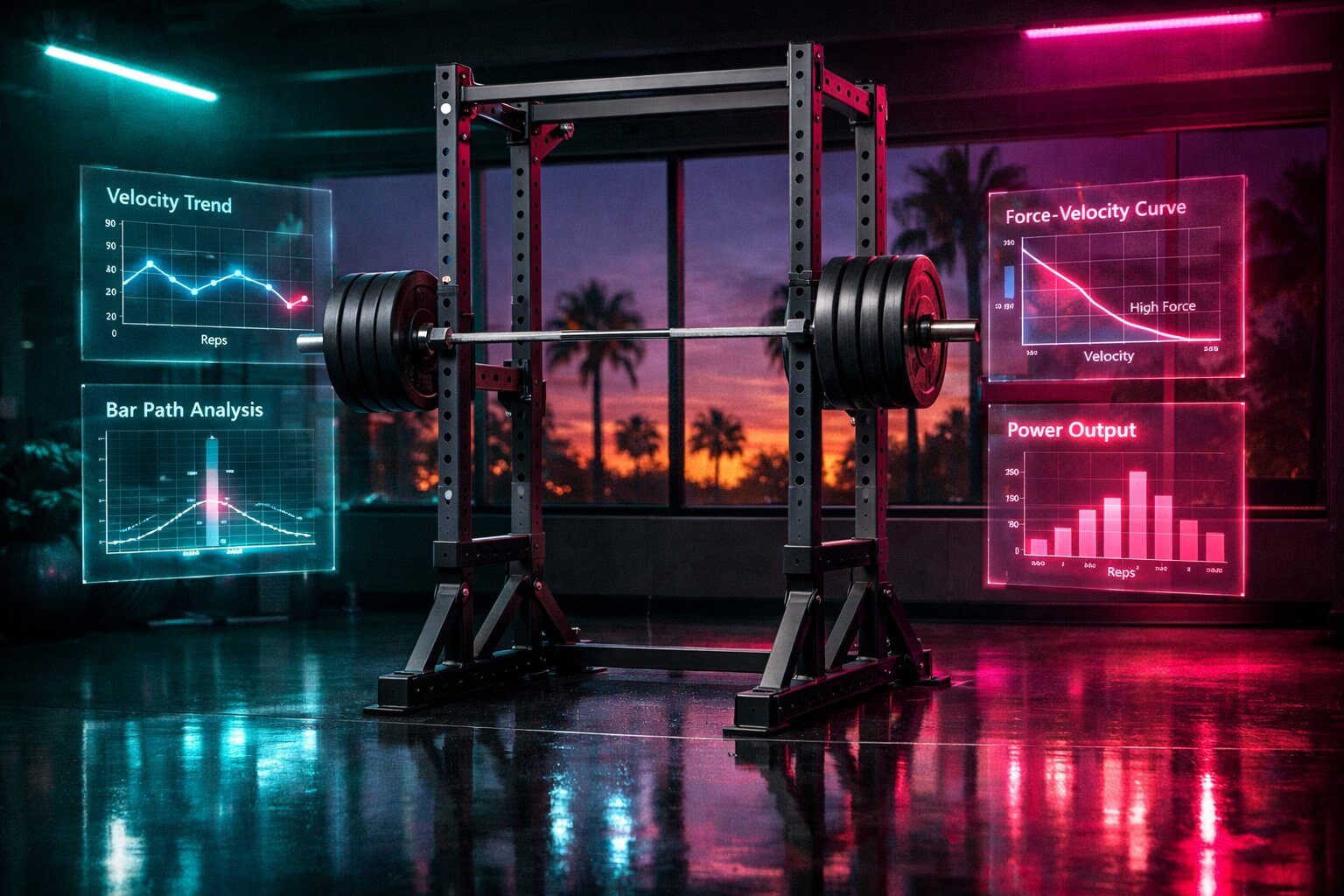
Velocity Based Training is grounded in the load-velocity relationship: as load increases, bar velocity decreases in a predictable, linear pattern. This relationship is individual to each lifter and can be mapped to create a personal load-velocity profile.
From this profile, we can estimate daily 1RM without maximal testing, prescribe loads using velocity zones that target specific adaptations, monitor fatigue through velocity loss within a session, and track long-term adaptation through shifts in the load-velocity curve.
FAQ
Common questions about VBT.
Do I need to understand VBT to train here?
Not at all. You lift. A sensor on the bar measures how fast it moved. Brad reads the data and adjusts your program. You don't need to know the science — you just need to show up and push. The technology works in the background so you can focus on training.
Is velocity-based training worth it?
If you've ever had a bad training day and didn't know why, or hit a plateau and didn't know how to break it — that's exactly what VBT solves. Traditional programs assume you feel the same every session. VBT measures your actual output and adjusts in real time, so you never waste a session grinding through weights your body isn't ready for.
Do I need my own VBT device?
For in-person training, no — we have equipment at the gym. For remote coaching, a device lets Brad see your bar speed data directly. But we can start without one using RPE-based feedback and add a device when you're ready. Entry-level trackers start around $250. See our device comparison →
How is VBT different from just using RPE?
RPE asks "how hard did that feel?" — and your answer changes based on sleep, stress, caffeine, and ego. VBT asks "how fast did the bar move?" — and the answer is objective. When RPE says "felt easy" but the bar was grinding, VBT catches it. When RPE says "felt heavy" but bar speed was fast, VBT tells you to add weight. Together, they eliminate guesswork.
How long before I see results?
Most athletes notice measurable velocity improvements within 4–6 weeks. Your load-velocity profile sharpens quickly, and programming gets more precise with each session. Within 3 months, most clients see real strength gains reflected in both their velocity data and their actual maxes — not just "feeling stronger."
What if I've been training for years — will VBT still help?
Experienced lifters are often the most surprised. You've been training by feel for so long that you can't see your own blind spots. VBT reveals patterns you'd never notice — like a squat that's 8% slower on Mondays, or a deadlift that peaks after 3 sets but crashes by set 5. The longer you've trained, the more the data has to teach you.
Still have questions about VBT? Email Brad — he answers everything personally.
Get Started
Ready to Experience VBT Firsthand?
See what data-driven coaching feels like in person. Your first session is free.
Real athletes. Real numbers. Every result below is backed by consistent coaching and tracked over time.
Powerlifting Data
+75 lbs
Squat PR · 6 months
Went from a shaky 315 to a confident 390 squat through structured progressive overload and smart intensity management.
9/9
USAPL Meet Attempts
Perfect 9-for-9 at first USAPL meet. Every attempt was planned and practiced in training — zero guesswork on the platform.
Weightlifting Data
+15 kg
Clean & Jerk PR · 12 weeks
Targeted technique work on the second pull translated directly to a competition PR. Coaching caught what self-training missed.
+10 kg
Snatch PR · 8 weeks
Identified the exact loading range where technique broke down. Focused work in that zone produced a smooth, confident PR.
CrossFit Data
-1:42
Fran Time · 8 weeks
Improved thruster velocity and cycling efficiency through targeted barbell speed work. Almost two minutes faster on the benchmark.
5★
Client Rating
Perfect rating from CrossFit athletes who value data-backed programming that doesn't sacrifice the competitive edge.
Bodybuilding Data
-18 lbs
Body Recomp · 12 weeks
Lost 18 lbs while maintaining or improving every major lift. Structured programming ensured training intensity stayed high throughout the cut.
-4% BF
Body Fat · 8 weeks
Nutrition coaching combined with structured training produced measurable body composition changes without sacrificing performance.
HYROX Data
-8:30
Total Time · 16 weeks
Structured strength and conditioning plan targeted HYROX-specific weaknesses. Over 8 minutes shaved off total race time.
-2:15
Sled Push Split · 8 weeks
Velocity-based leg power training directly improved sled push efficiency. The strongest station became the fastest station.
Velocity Data
0.38 m/s→0.52 m/s
Squat velocity at 315 lbs · 12 weeks
A 37% improvement at the same load. 315 went from a grind to a confident working weight through structured programming.
0.22 m/s→0.35 m/s
Bench velocity at 225 lbs · 8 weeks
Strength adaptation was measurable weeks before the max even moved. Consistent programming built real confidence under the bar.
What Our Athletes Say
Real Athletes. Real Words.
★★★★★
"The peaking protocol was dialed. I felt stronger on meet day than I ever had in the gym, and that doesn't happen by accident."
Claudia Arzillo
USAPL Powerlifter

★★★★★
"I went from surviving HYROX to competing in pro division. The difference was learning how to pace the full race instead of just going hard and hoping."
Mathieu Celestin
Hyrox Pro
★★★★★
"Qualifying for Quarterfinals once is hard. Doing it three years straight means the coaching is building something sustainable, not just chasing short-term results."
Maria Alvarez
CrossFit Athlete
★★★★★
"I won my pro card, and I did it without destroying myself in the process. The prep was hard, but it was structured — I never felt like I was guessing or spiraling."
Abby Fleisner
IFBB Pro Bodybuilder
★★★★★
"60 pounds in 8 months, and I actually kept my energy through the whole process. This wasn't a crash diet — it was a structured plan that I could stick to while living my life."
Charlie Houck
Fat Loss / Nutrition
★★★★★
"Six months after back surgery, I squatted 300 pounds. I didn't think that was possible, but having Brad as a coach who understood post-surgical progression made me believe it was safe to push."
Robert Brower
Post-Surgical Comeback
★★★★★
"I'd heard about peptides but didn't want to go in blind. Having a coach who monitored everything and adjusted along the way gave me confidence that I was doing this the right way."
Mariah Yeager
Peptide-Assisted Body Composition
★★★★★
"7 medals in 9 events at the Senior Games. Everyone told me to slow down — Brad told me to train smarter. That made all the difference."
Tonnie Dahl
SD Sr. Games Gold Medalist
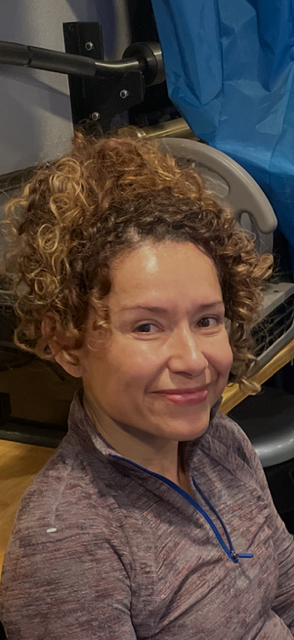
★★★★★
"Brad built my programming specifically around my competition schedule. Going into my last CrossFit comp, I felt more prepared than I ever have — every weakness had been addressed."
Kerry
CrossFit Athlete

Get Started
Want Results Like These?
Every result started with one decision. Book a free session and see what personalized coaching can do for you.
Monday – Friday5:00 AM – 6:00 PMSaturdayBy AppointmentSundayBy Appointment
All sessions by appointment only.
What to Expect
The first step is a free training session — in person or by video call. We'll talk about your training history and current goals, what data-driven coaching looks like for your situation, and whether in-person or remote coaching is the right fit. No pressure. No sales pitch. Just a real session.
Access your training dashboard, velocity data, and programming through The Velocity Method platform. Login uses magic link authentication — enter your email and check your inbox.