THE VELOCITY METHOD
Six Lifts. Every Muscle. Tracked by Science.
Your body doesn't need 30 exercises. It needs six — done right, tracked precisely, and progressed intelligently. This is how we train every athlete at Yeager's Gym.
SOUND FAMILIAR?
Most programs fail because they solve the wrong problem.
You don't need more exercises. You need fewer exercises, done better, with a way to prove they're working.
Program Hopping
New program every 4 weeks. Nothing sticks long enough to drive real adaptation. You're restarting, not progressing.
Random Exercise Selection
15 exercises per session, half of them redundant. You're doing cable kickbacks and leg extensions when six compound lifts would cover everything.
No Way to Measure Progress
You "feel" stronger but can't prove it. No velocity data, no load-tracking system, no objective feedback. Just vibes.
Guessing at Weights
Your 1RM was tested three months ago. You're still using those percentages even though your strength has changed. The program can't see what your body is telling it.
THE FOUNDATION
Six Compound Lifts. Every Muscle Group. Zero Redundancy.
Each lift targets a primary movement pattern. Together, they cover every major muscle group in the body — quads, hamstrings, glutes, chest, back, shoulders, arms, and core. This isn't minimalism for its own sake. It's efficiency backed by science.
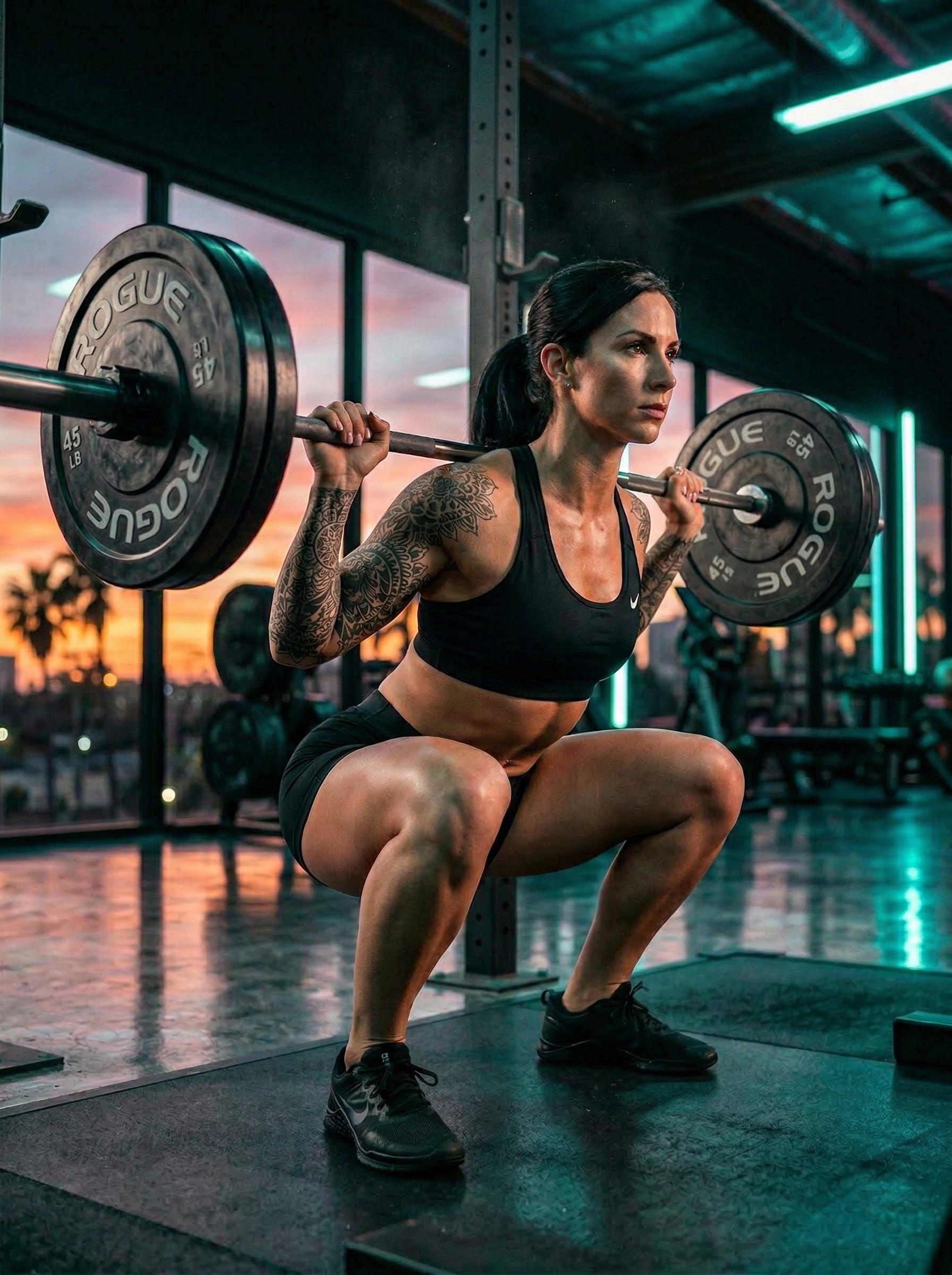
Back Squat
Quads, glutes, core, adductors. The king of lower-body strength — no other single exercise loads the anterior chain this effectively.
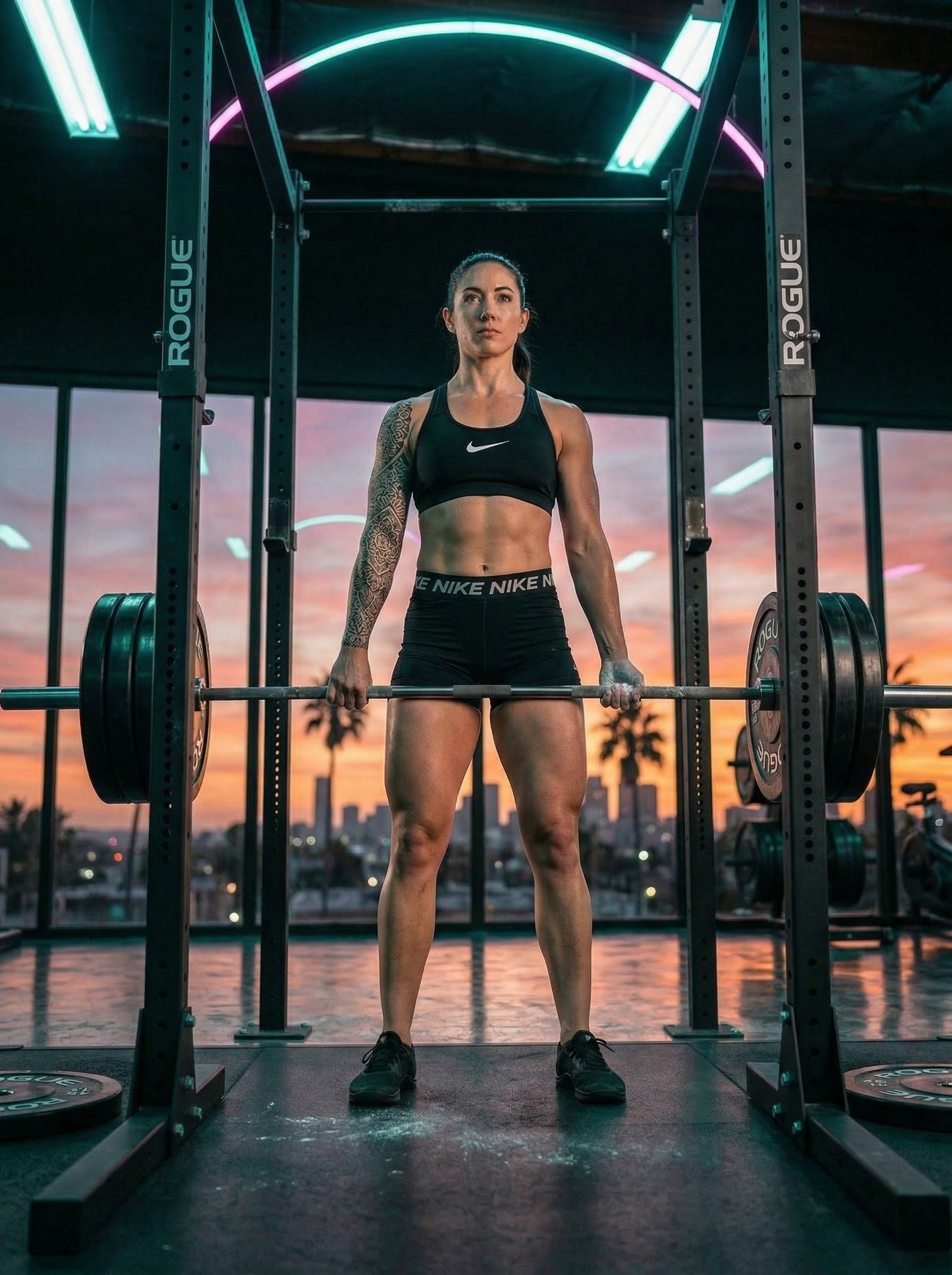
Deadlift
Hamstrings, glutes, erectors, lats, grip. Loads the entire posterior chain from floor to lockout. The most honest test of total-body strength.
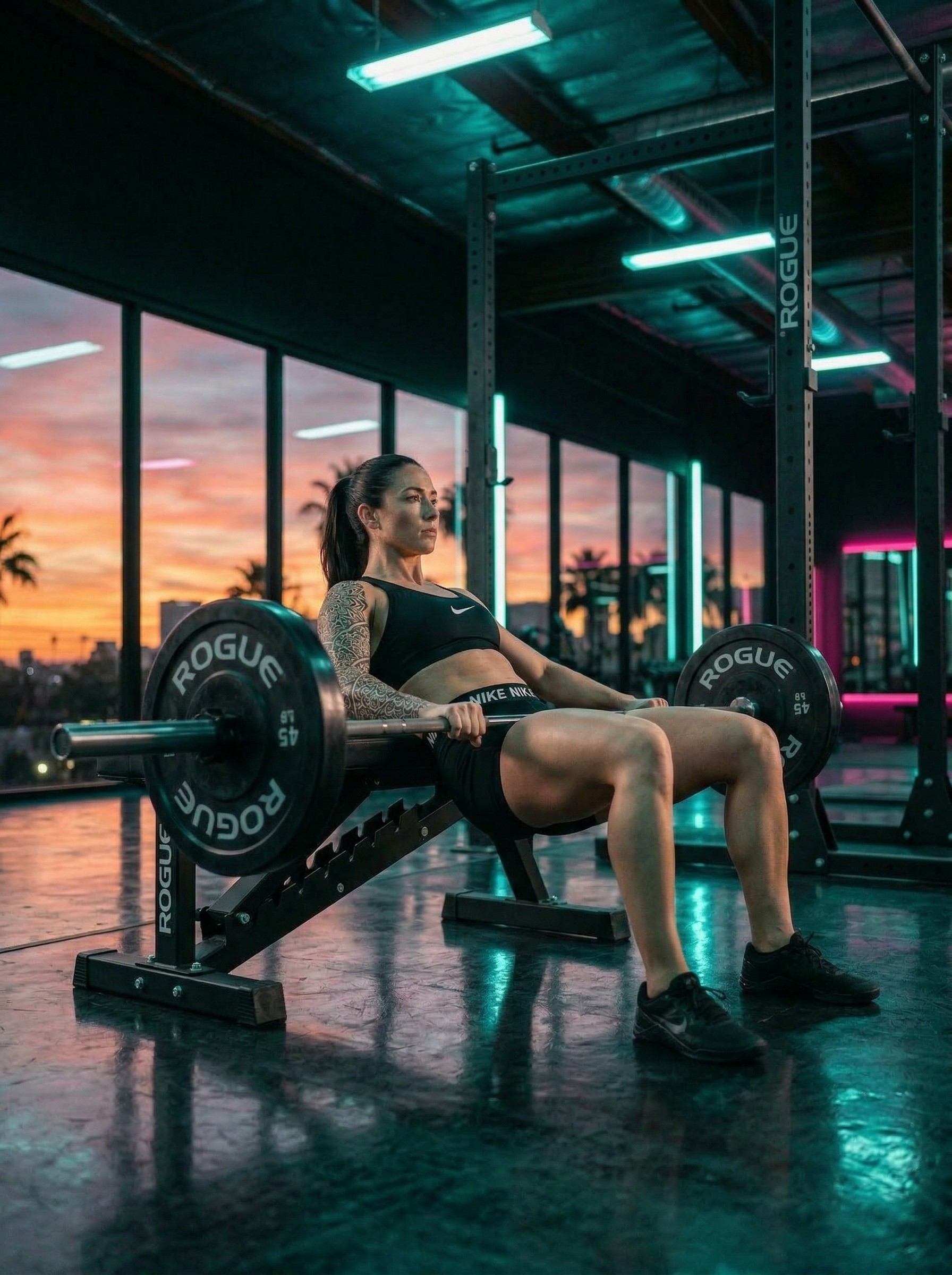
Hip Thrust
Glutes, hamstrings. Peer-reviewed research shows the hip thrust produces significantly greater glute activation than squats alone. This is why it's in the system.
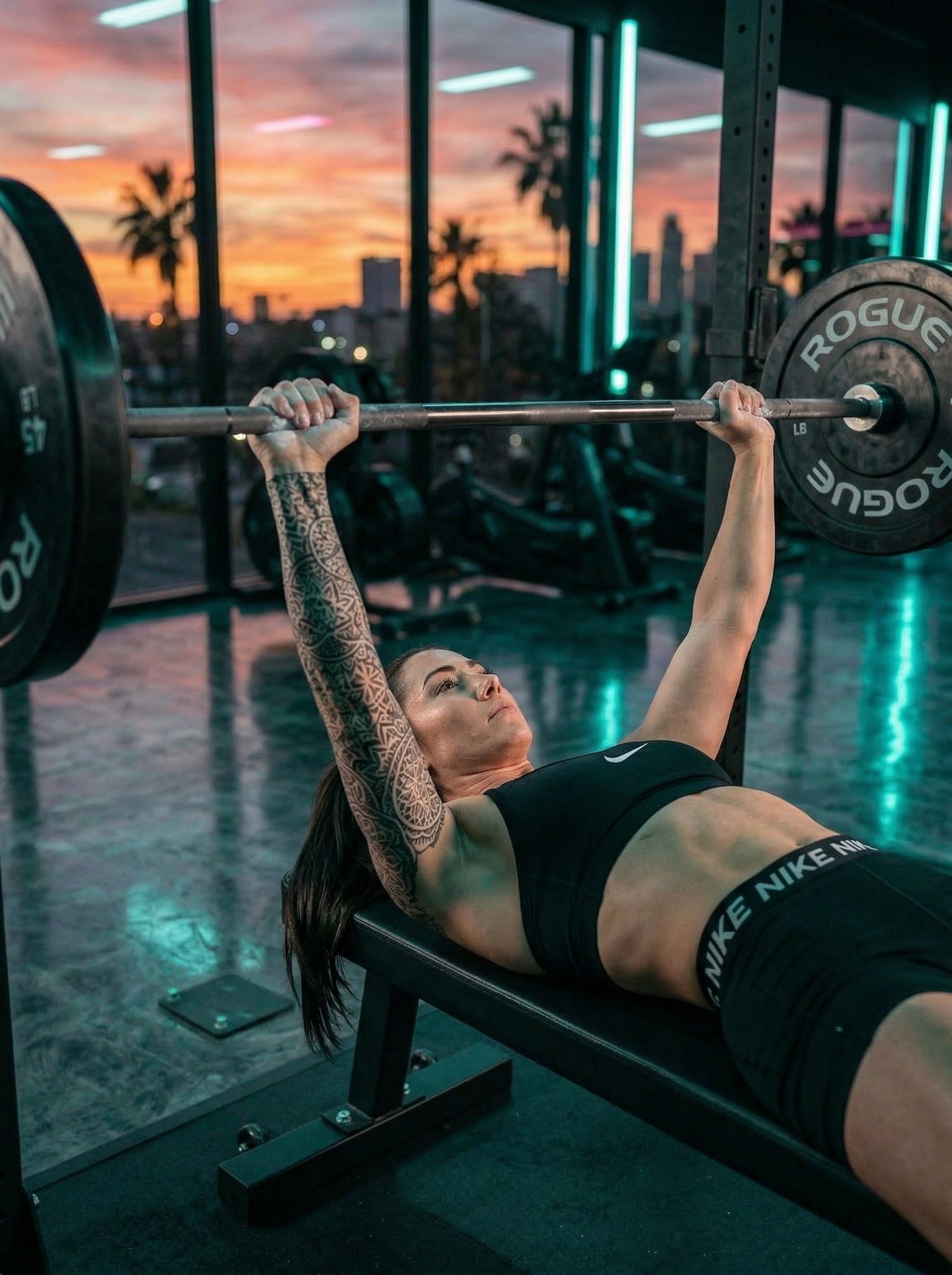
Bench Press
Chest, anterior delts, triceps. The primary horizontal pressing movement. Builds pushing strength and upper-body mass.
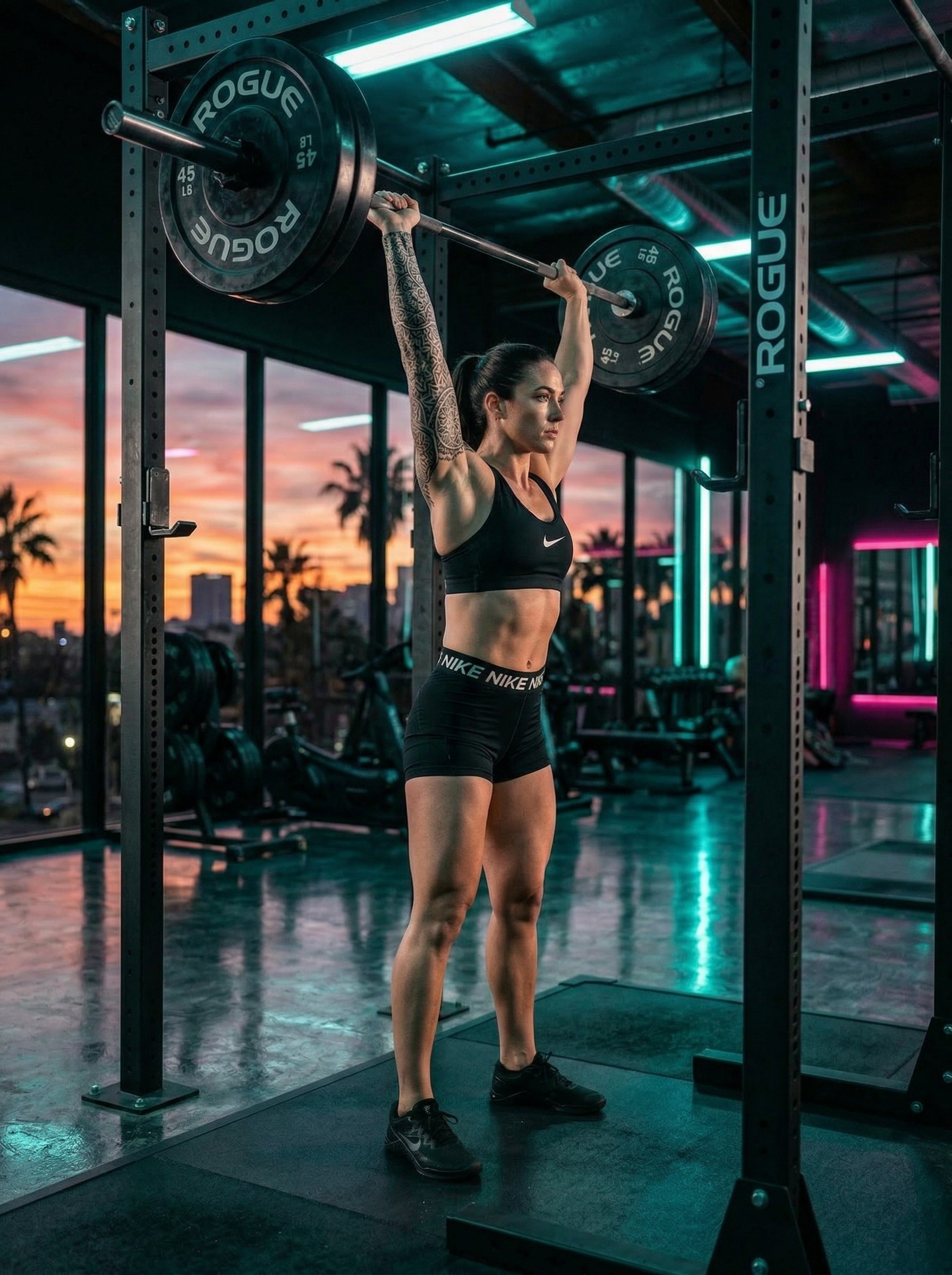
Strict Press
Shoulders, triceps, upper chest, core. No leg drive, no momentum. Pure overhead pressing strength that demands total-body stability.
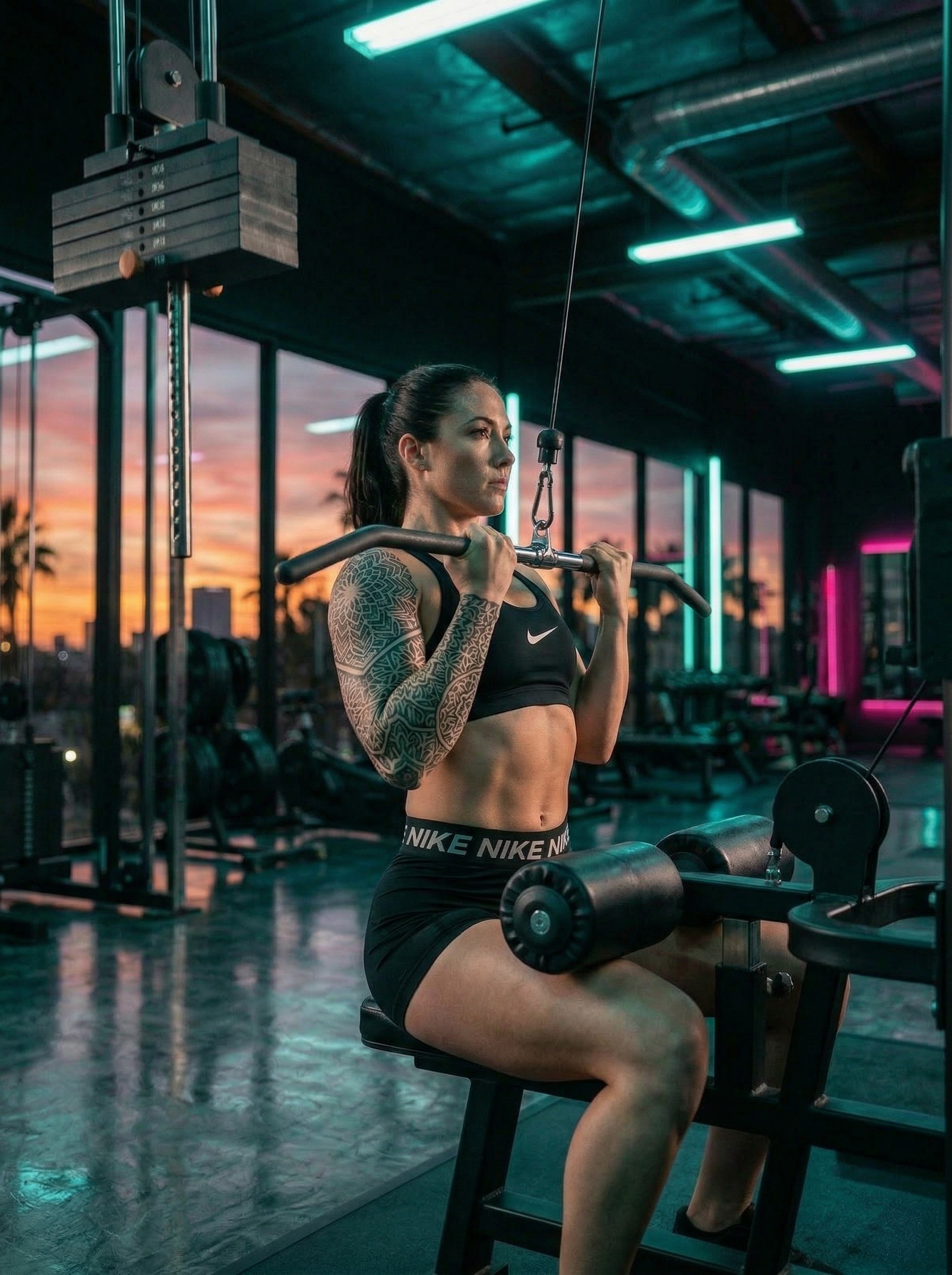
Cable Chin-Up
Lats, biceps, rear delts, forearms. Shoulder-width underhand grip on a cable stack. Scalable from assisted to loaded — trackable at every level.
What About Accessories?
- Accessories complement the six lifts — they don't replace them
- Programmed on an as-needed basis based on your goals and weak points
- Curls, lateral raises, face pulls, rows, cable kickbacks, leg extensions — added where the data says you need them
- Modifications for athletes with limited equipment
- Volume is tracked and adjusted just like the main lifts
- The foundation comes first. Accessories fill the gaps.
THE RESEARCH
This Isn't Opinion. It's Published Science.
Athletes who train fewer compound lifts get stronger faster than those doing complex programs.
Researchers compared multi-joint compound training to programs packed with isolation exercises. The compound group gained significantly more strength across every tested movement — in less total training time. More exercises didn't mean more results. It meant more fatigue.
The hip thrust builds glutes at over double the rate of squats alone.
Surface EMG testing proved the barbell hip thrust produces 237% greater peak glute activation than back squats at matched loads. This is why the hip thrust is one of our six — and why "just squat more" is incomplete advice. Most programs leave glute development to chance. We don't.
Heavy compound lifting is linked to significantly lower all-cause mortality.
A meta-analysis of over 370,000 participants found that resistance training — specifically multi-joint compound movements like squats, deadlifts, and presses — reduces your risk of dying from cardiovascular disease, cancer, and diabetes by 10-17%. Not machines. Not isolation curls. The barbell compound lifts in our program are the exact movements the research points to as the most protective.
THE DIFFERENTIATOR
The lifts are the foundation. Velocity is what makes it intelligent.
Most coaches prescribe weights based on a 1RM test you took months ago. We attach a sensor to the bar and measure how fast every rep moves — in real time. Your program adapts to your body today, not a spreadsheet from last quarter.
Real-Time Feedback
A Vitruve sensor tracks every rep. You see your bar speed live. Your coach sees it too.
Auto-Regulated Load
Bar moving fast? You've earned heavier weight. Bar slowing down? We pull back before you grind. No ego lifting.
Objective Progress
No more "I think I'm getting stronger." Your velocity data proves it — or shows exactly what to fix.
THE SCIENCE OF SPEED
Your Bar Speed Knows More Than You Do.
Velocity-based loading produced greater strength gains than traditional percentage-based programs.
Researchers split trained athletes into two groups — one followed fixed percentages, the other adjusted load based on daily bar speed. After 6 weeks, the VBT group produced significantly greater 1RM squat and bench improvements while completing less total volume. The bar told them exactly when to push and when to pull back. The percentage group just followed a number from a spreadsheet and hoped for the best.
Velocity-based training builds the same strength with dramatically less fatigue.
Fourteen studies. One conclusion: athletes who used velocity loss cutoffs got just as strong as those grinding through percentage-based programs — but with significantly less neuromuscular fatigue. That means faster recovery, fewer missed sessions, and a body that can actually sustain the training long enough to see results.
When athletes can see the number, they push harder — automatically.
Give someone a velocity target and they recruit more muscle, produce more force, and train with higher intent — without being told to "try harder." The screen does the coaching. Real-time feedback hijacks your nervous system into performing. It's not motivation. It's measurement-driven behavior change.
WHY IT'S DIFFERENT
Traditional Training vs. The Velocity Method
❌ The Old Way
✦ The Velocity Method
HOW IT WORKS
Three Steps. That's It.
No complicated onboarding. No 47-page questionnaire. Show up, lift, let the data do the rest.
Assessment
Your first session is free. We test your six lifts, build your velocity profile, and establish your baseline. Takes 60 minutes.
Program
Brad builds your training plan around the six lifts with velocity targets, progressive overload, and accessories for your weak points.
Track & Adapt
Every rep is tracked. Every session is reviewed. Your program adjusts weekly based on real performance data — not guesswork.
THE RESULTS
The Data Speaks for Itself.
First Measurable PR
Programs Sent. Ever.
Every Rep, Every Set.

"The peaking protocol was dialed. I felt stronger on meet day than I ever had in the gym."
Claudia Arzillo USAPL Powerlifter
"Qualifying for Quarterfinals three years straight means the coaching is sustainable."
Maria Alvarez CrossFit Athlete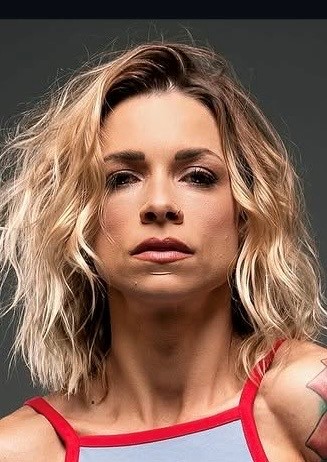
"I won my pro card without destroying myself. The prep was structured — never guessing."
Abby Fleisner IFBB Pro Bodybuilder
"60 pounds in 8 months. Structured plan I could stick to while living my life."
Charlie Houck Fat Loss / Nutrition
"I went from surviving HYROX to competing in pro division."
Mathieu Celestin Hyrox Pro
"7 medals in 9 events at the Senior Games. Brad told me to train smarter."
Tonnie Dahl SD Sr. Games Gold Medalist
"The peaking protocol was dialed. I felt stronger on meet day than I ever had in the gym."
Claudia Arzillo USAPL Powerlifter
"Qualifying for Quarterfinals three years straight means the coaching is sustainable."
Maria Alvarez CrossFit Athlete
"I won my pro card without destroying myself. The prep was structured — never guessing."
Abby Fleisner IFBB Pro Bodybuilder
"60 pounds in 8 months. Structured plan I could stick to while living my life."
Charlie Houck Fat Loss / Nutrition
"I went from surviving HYROX to competing in pro division."
Mathieu Celestin Hyrox Pro
"7 medals in 9 events at the Senior Games. Brad told me to train smarter."
Tonnie Dahl SD Sr. Games Gold MedalistFREE DOWNLOAD
Get the 6-Lift Cheat Sheet
Movement cues, muscle targets, and velocity benchmarks for all six lifts. One page. Print it. Bring it to the gym.
We respect your inbox like a max attempt. No nonsense.
FAQ
Common Questions About The Velocity Method
What are the six lifts in the Velocity Method?
Back squat, deadlift, hip thrust, bench press, strict press, and cable chin-up. Three lower-body patterns and three upper-body patterns — covering every major muscle group with zero redundancy. Most programs throw 15+ exercises at you and hope something works. Six compound lifts, tracked with velocity data, is more effective in less time.
See the breakdown →Why only six exercises? Is that enough?
Research consistently shows multi-joint compound lifts produce equal or greater strength gains compared to programs with dozens of isolation moves — in significantly less time. The problem with most programs isn't too few exercises — it's too many, with no way to track whether any of them are working. Six lifts, measured every session, beats 20 exercises done on autopilot.
What is velocity-based training and why does it matter?
A sensor on the barbell measures how fast each rep moves. This tells Brad exactly how strong, fatigued, or recovered you are — in real time, every set. Most programs are written weeks in advance based on a max you tested months ago. Your body doesn't work that way. VBT means your program adapts to your actual performance today, not a number from last quarter.
Learn more about VBT →I'm not very strong yet — is this too advanced?
Beginners benefit the most. Without data, new lifters rely on guesswork — and that's how people get hurt or stall out. VBT gives Brad an objective read on your capacity from session one, so loads are never too heavy and progression is never too aggressive. The method scales to you, not the other way around.
Book a free session →How is this different from what I'm doing now?
Most programs prescribe fixed weights and reps with zero feedback. You follow the spreadsheet whether you slept 4 hours or 9. The Velocity Method tracks every rep with a sensor, sees how your body actually responded, and adjusts accordingly. Bad day? The data catches it and pulls back before you grind through junk volume. Great day? The data tells you to push harder. Your body changes every day — your program should too.
Can I follow the Velocity Method remotely?
Yes — and it's not a watered-down version. Remote athletes use a Vitruve sensor at their own gym. Brad reviews your bar speed data weekly and adjusts your program based on how every set actually moved. Same method, same precision, different zip code.
Learn about remote coaching →What about isolation exercises and accessories?
The six lifts are the foundation — they drive 80% of your results. Accessories like curls, lateral raises, and face pulls are programmed around them to address your individual weak points. But the compounds come first, because that's where the data lives and the progress compounds.
Have a question that's not here? Email Brad — he answers everything personally.
GET STARTED
Stop Guessing. Start Training with Data.
Your first session is free. Walk in, pick up a barbell, and see what velocity-tracked coaching feels like. In-person in San Diego or remote anywhere.
Book Your FREE Session!